
Repost:: Tick Doc
It’s the time of year for disease-carrying parasites

“Doctor Mary, I know I’m here for my physical, but I need to ask you about ticks. I found one on my neck the other day and pulled it off. I think I got all of it, but the spot is itchy and red. I knew I had this appointment coming up so I figured it could wait, but then I looked on the internet. I know I shouldn’t do that! It said all kinds of scary stuff, like I might develop an allergy to beef, or need a pacemaker, or lots of other stuff.
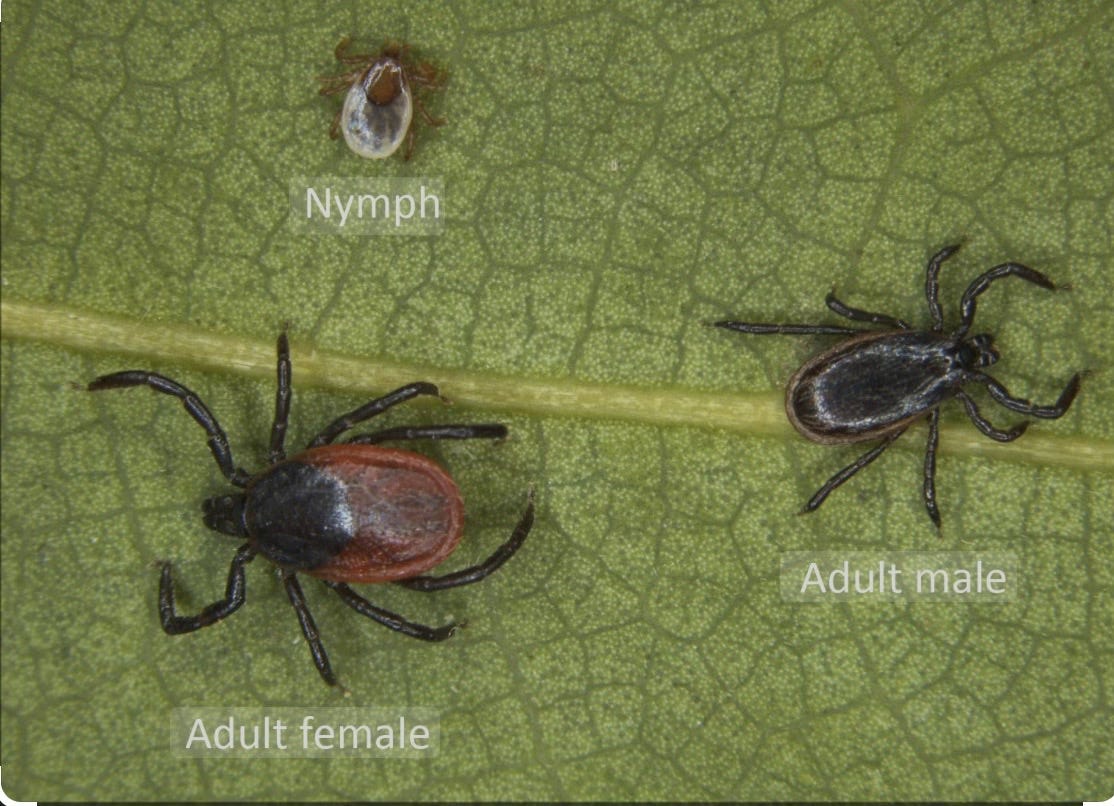
“I feel fine now, but what if I’m harboring something horrible? I have to take care of my kids. I don’t have time for these problems, but I think I got the tick while watching my son’s soccer game. I can’t stop doing that kind of stuff! I can’t just stay inside until winter. Summer is the best season in New England. I don’t know what I should do.”
“Gosh, Alyssa! I’m glad you told me what you’re worried about. Let’s sort that out and then do your physical.”
“Okay. I’m pretty sure I need antibiotics, because I don’t want to have Lyme Disease, but now I think maybe I should have called you right away and not have waited this long.”
“Tick bites are a confusing topic, and Lyme Disease is nasty. But, there’s no reason to panic. Let me try to explain it all, but try hard not to gag because what I need to tell you about ticks is pretty disgusting, Okay?”
Alyssa had achieved a certain level of notoriety in the clinic because a few years ago, she had vomited while watching her husband get his earwax removed. Many medical professionals find earwax to be the most objectionable bodily fluid so my staff was quite sympathetic.
“Okay, Doctor Mary. As you know, my stomach is not the best. Maybe I shouldn’t be having this conversation before lunch.”
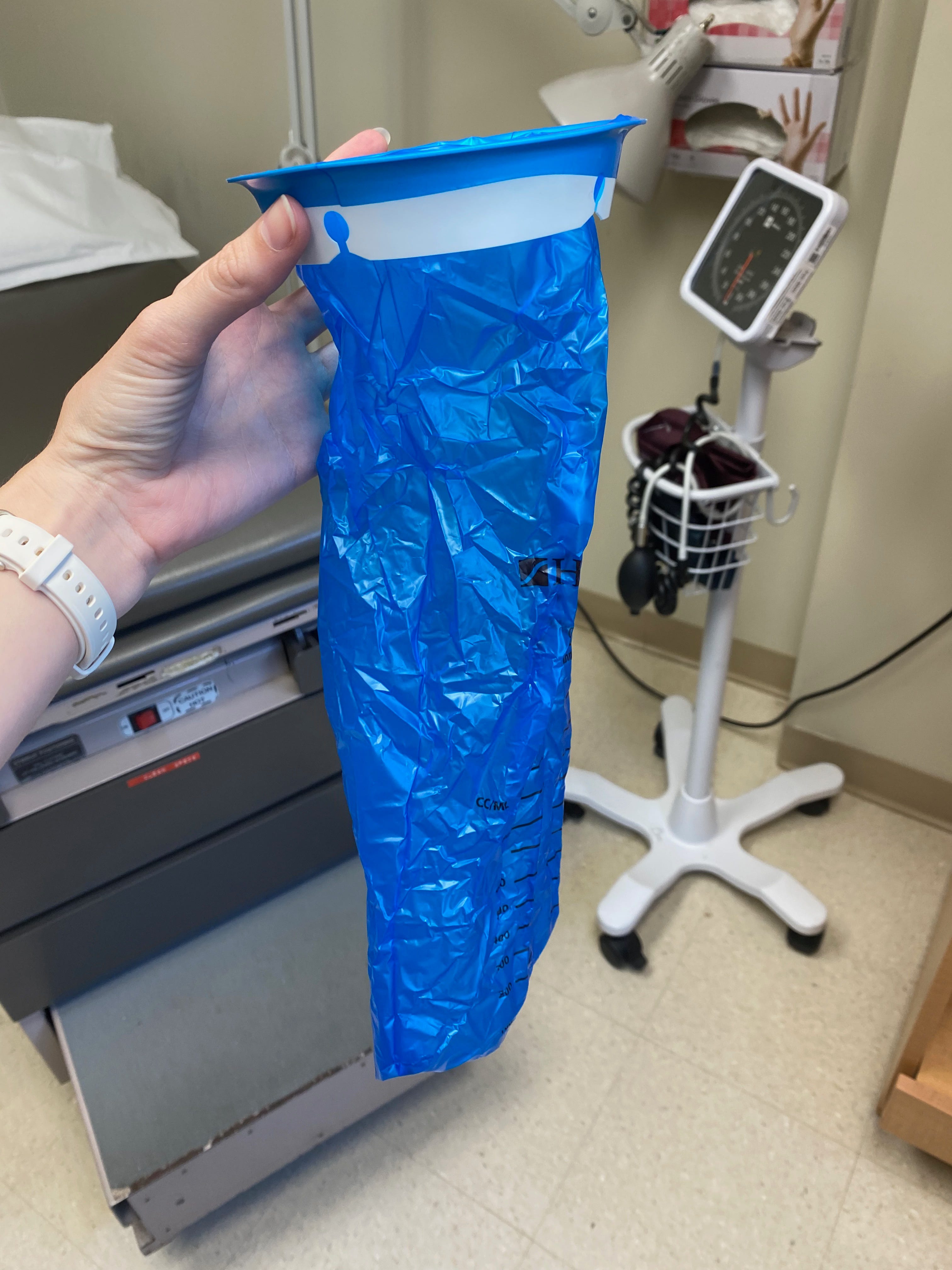
“Well, we gotta do it now, Alyssa. Let me know if you need a barf bag. We always have one right in this drawer here.”
I opened the cabinet drawer to remind her where they were. “As you know, we use them pretty often. One of my patients calls them elephant condoms because of their size and shape.”
Alyssa gasped and then giggled, “You never told me that before!”
“When I think about antibiotics for a tick bite, there are three different things we need to consider.
Do you have Lyme Disease?
Are you in circumstances where we should give you an antibiotic to prevent you from getting Lyme disease?
Is the tick bite itself infected just because ticks are disgusting and filthy?
“I’ll go over these with you in reverse order, but first let me tell you about ticks because that’s important for understanding how they spread disease.
“The life of a tick is pretty limited. They live at ground level around grassy plants and are active whenever the temperature is above freezing. They climb up the grasses and hang out at the top, waving their little ticky arms and hoping something comes by that they can latch onto, like your pant leg or your dog.
“Once they’ve latched onto something warm, the ticks start climbing upward. When they can’t make further progress, they stop and begin gnawing through a spot in the skin. This is why you often find them at the hairline or underwear line.
“The small ones are about the size of a pepper flake. The large ones are just a little bigger. Finding them is a tough job.
“If you find one attached, do your best to pull it off. If you leave tick body parts in there, don’t worry about it. Your body will spit them out eventually.
“The first thing to know about tick bites is that ticks do not brush their teeth. Even if they don’t give you a disease, they can give you bacteria that can cause an infection.
“And, even if the tick doesn’t give you bacteria, their bite can get inflamed because your body recognizes the tick's biting and sucking apparatus as foreign and sends your immune system to do something about it. When the bite becomes inflamed, that’s your body working like it’s supposed to.”
Alyssa responded, “That’s probably what happened on my neck! You’re right, the bite was right at the hairline in the back, and I can’t see it! But I took a picture with my phone, and it looked all red and angry.”
“Yep. Let me take a look at your neck and at that picture.”
I inspect both and conclude, “Your neck just looks inflamed, and I can see it’s better today than it was the day you took the picture. Let’s just have you keep an eye on it. It doesn’t look infected. I don’t think you need antibiotics right now. Of course, tell me if it gets worse.
“Now, let me tell you about how tick bites work.
“In order for a tick to give you the bacteria that cause Lyme Disease, the tick has to be attached to you for about 36 hours. It takes them that long to really get going on feeding. It’s of course hard to know how long a tick has been on you because most of the time you’re not aware that you have a tick on you until well after they’ve started to bite.
“So, here’s what’s important to know about tick anatomy. Ticks have a little mouth part that pierces the skin and other parts that make a local anesthetic so you don’t feel the bite. The part that sucks up the blood has little barbs on it, and these barbs make a cement that does an impressively good job at keeping the tick attached to you. When the tick is done sucking blood, the barbs secrete something that dissolves the cement. The tick then drops off you and looks for a place to lay eggs.”
Alyssa asks, “So that’s why sometimes the ticks are easy to get off and other times it’s almost impossible? If they haven’t made their little cement yet, it’s easy to get them unattached.”
“Exactly. If the tick comes off easily, you don’t have to worry about it having given you a disease because it hasn’t been on you long enough. The tricky part is that they get themselves cemented in and start eating for quite a while before their bacteria start to get transferred to you. Ticks are really slow. So, if the tick is still flat and not swollen with blood, it’s probably not been on for 36 hours, but this can be hard to tell because they’re the size of pepper flakes. And while the barbs and cement are pretty icky, here’s where tick anatomy gets really disgusting.
“The Lyme bacteria live in the tick’s intestines. When the tick is feeding, it sucks in your blood, then it extracts water from that blood and spits that water back into you. Along with that water comes the tick’s intestinal bacteria.”
Alyssa says, “I bet that’s why people say not to squeeze the swollen tick when you pull it off, because you can squeeze its germs right into you, like making the tick throw up into the wound it made. Oh, this is so disgusting!” she giggled, “But it’s kind of fascinating, too.”
I’m glad to hear that Alyssa probably won’t be needing the elephant condom.
“You can buy a special tick tool to remove them or use tweezers.
“Another thing I should mention about tick anatomy is that I’m only talking about the kinds of ticks that we have in New Hampshire. Other places have kinds of ticks that can start eating blood much faster, giving you a disease much faster. The kind of tick we have to be concerned about around here is the blacklegged tick. It’s the one that carries Lyme Disease, and fortunately, it’s slow.
“Wait! blacklegged tick? I thought it was the deer ticks.”
“Somebody in charge of naming ticks decided ‘deer tick’ was misleading. Maybe that’s so, but it does make for confusion. Now they’re called ‘blacklegged’ ticks. Anyway, that’s what you need to know about tick anatomy. The next topic is preventing Lyme Disease.
“Even if a tick has been on you long enough to transfer bacteria to you, if we promptly give you an antibiotic, we can prevent you from getting Lyme Disease. All that takes is a single dose of doxycycline. The percentage of ticks around here that carry Lyme Disease is very high, so this quick treatment with antibiotics is our best line of defense.
“The problem is this works only during your initial exposure to Lyme Disease. It’s like how it’s easy to get rid of ticks before they’ve had a chance to cement themselves in place. Once Lyme Disease cements itself in place, it’s much harder to get rid of. So, if you find a tick on you that’s swollen or that you have reason to think has been on you for 36 hours, call me and I’ll give you a prescription for a preventative dose.”
Alyssa asks, “But what if it was a Friday night? We wouldn’t get the prescription until Monday. Wouldn’t that be too late? I’m really worried about this because between me and Ben and the kids, we’re always getting ticks. Normally, we’re able to get them off pretty fast because we’re pretty good at looking for them, but this one was sneaky, biting me behind my neck. Wouldn’t it be better for us to have the pills on hand, just in case?”
“Well, since Ben is my patient and I know his medical history and since I know both of you are reliable and thoughtful and wouldn’t just take the antibiotic randomly, I’m willing to prescribe a dose for you to have on hand if you or Ben were to need it. However, I am not your children’s doctor. Not only do I not know anything about their medical issues, I don’t even do children’s medicine. I know that some antibiotics we use routinely for adults are not safe for children. And even if doxycycline is safe for children, I wouldn’t know what dose to prescribe. It’s almost certainly different from the dose for adults.
“So, I need for you to promise me that if I give you a dose to have on hand just in case, it’s only for you and Ben. No one else, and most particularly not your kids! If your kids get a tick bite, you have to call their doctor to find out what to do, or take them to urgent care.”
“Oh, gosh! I hadn’t thought of the fact that an antibiotic that would be okay for me would be unsafe for my kids. Of course, I promise that I would never give it to my kids - just Ben and me.
“But now you’ve made me worried about the bite I got. I pulled that tick off four days ago. That’s too late for the preventative dose, isn’t it? And the tick I pulled off was swollen, and when I smushed it, I thought I saw blood. It had to have been on me long enough to make me sick. I don’t know how long. Maybe I got it before that soccer game. It could have been there days earlier. I don’t know because I could not see it.
“I’m just doomed now to be stuck with Lyme disease, aren’t I? I read on the internet just how awful it is and how hard it is to get rid of”.
As Alyssa said this, her tone became ever more frantic. I couldn’t tell for sure if she was being overly dramatic to be funny or if she was serious. I decided it was safest to react as though I thought she was serious.
“No. The majority of ticks do not carry Lyme Disease. So, you are probably totally fine.”
“Probably?” Alyssa asked, sounding alarmed. “Just probably? Like just probably last year when I probably only had a cold and it turned out to be Covid?”
“We figured out after testing you that it was Covid,” I reminded Alyssa.
“So, suppose you were infected. Right now, you’re too far out to treat with a single dose of antibiotic, but not enough time has passed for your body to develop antibodies to Lyme Disease. So it’s too soon to test you for it.
“What to do now is to get Ben to look at the back of your neck every day - or take a photo every day and do it yourself - and watch for a bullseye rash. It will probably be around the bite, but it could appear anywhere on you. If you see one, you have Lyme Disease and we’ll treat you. Even at this stage, Lyme Disease is easily treatable.
“The bullseye rash, however, doesn’t always show up. If you’re still concerned, or you’re not feeling well, after two weeks have passed, we can check your blood for antibodies. If the antibodies show up, we can treat you then.”
“But why wait? Why can’t we just assume I have Lyme and treat me now? I don’t really like playing wait and see. It makes me all anxious.”
“Because the treatment for Lyme Disease is two weeks of antibiotics. The antibiotic is tough on your gastro-intestinal system. It causes most people to feel nauseated part of the time, and some people terribly so, and I bet you’d be one of them. Also, it makes a lot of people susceptible to sunburn with just minimal sun exposure. Worst of all, because of the side effects, some people decide not to complete the treatment. Then whatever happens to them after that, it makes it difficult to interpret their blood tests and to diagnose any future symptoms that might or might not be Lyme Disease.
“As I said, Lyme is treatable, but it’s really best not to undergo the treatment unless it’s really necessary.”
“I guess you’re right. My GI system is already a bit cranky. I could imagine myself getting annoyed with the nausea and stopping the antibiotic, then if my test came back positive, not really wanting to take the rest of the antibiotics. Also, I’m also prone to vaginal yeast. I bet I’d get that, too, as that happens almost every time I get put on an antibiotic. So, I get what you mean about not doing the treatment unless it’s really necessary. But what about all those people who have Lyme Disease and can’t get rid of it? They say if they’d been treated sooner, they wouldn’t be stuck with Lyme.”
“I would have to see the particular person’s situation, Alyssa. It might be, of course, or it might be other stuff going on that gets labeled Lyme Disease. Even if people get really sick, we can treat them successfully. Back when we were first learning about Lyme Disease, I saw two patients get really bad Lyme. Neither was my patient, but it was such a new and mysterious disease that all of the doctors wanted to hear everything about it. This was a really long time ago, back when doctors like me visited our patients in the hospital first thing in the morning before we went to our clinics. And all that travel back then took longer, as it was by horse and buggy.
“One patient got it in his heart’s conduction system. He ended up needing a temporary pacemaker because his heart was going at about thirty beats per minute. He got antibiotics and walked out of the hospital about a week and a half later. The other one thought he was having a stroke because part of his face was drooping. A neurologist heard the patient’s story and was the first to suspect Lyme Disease. The second patient took a bit longer to recover, but was discharged, totally recovered after about a month. They also had other, unrelated stuff going on that kept them in the hospital for some of that time.
“Okay, but on the internet I read about there being people who just don’t recover.”
“Some of the people who say that if only they’d been diagnosed sooner, their lives would be better, think that they have chronic Lyme Disease, but we don’t really know what they have. If you look around, you’ll find doctors who’ll give people antibiotics - in some cases IV antibiotics - for months to treat it. I don’t doubt that people who think they have chronic Lyme Disease feel bad and I don’t even doubt that they have something, but I am not convinced that the something they have is chronic Lyme Disease and I’m pretty sure that they don’t need IV antibiotics for months on end, but without seeing their charts, I can’t really say what they do have.
“When we check you for Lyme, we’ll also check you for a bunch of other diseases that ticks carry, just to make sure you don’t have those, too. Most tick-borne diseases give you dramatic symptoms, but usually not for a few days to weeks. They all have roughly the same kind of symptoms: fever, muscle aches, and GI symptoms. This makes it a bit of a challenge to tell if someone has a tick-borne disease or some virus. A virus will get better on its own, but most of the tick-borne illnesses do not get better without treatment, and they can make you really sick. So, if you get symptoms in the next month, I need to hear about it.”
“Yikes. Even though you’ve convinced me that Lyme is treatable, all of this stuff makes me feel anxious about ticks - especially the icky part about how they spit into you. I don’t want to take the risk of being bitten, but I don’t want to live inside all summer!”
“There is stuff you can do to protect yourself. None of it is perfect, but it helps. Ticks live in grassy, humid areas, so keeping out of grassy areas, especially areas where the grass is tall, and especially in spots where the ground is damp. Unfortunately, in New Hampshire, that doesn’t exclude many places except the ones covered with pavement, water, or dense forest.
“You can spray insect repellent on your shoes. I think this is especially helpful if you wear boots. Some people put duct tape around their pant legs with the sticky side out to catch ticks. Tucking your pants into your socks can help. Gaiters can help, too, especially if you spray them with insect repellent. Wearing light-colored clothes makes it easier to see the ticks, so you can remove them before they bite. Taking a shower after you’ve been in an area where you might pick up ticks is a good idea, and having someone else inspect you for ticks can be helpful, especially in those places that are hard for you to see, like behind your neck.
“Now, that we’ve done tick university, shall we move on to your physical, Alyssa? I’ll start where I always do by asking you what you do for exercise.”
“I thought we just covered that. I walk around picking up ticks.”
*Alyssa and her family are patient amalgams and any resemblance to real people is accidental. None of the ticks, however, has ever been my patient; although I have become quite well acquainted with many over the years. These filthy blood-suckers are described accurately and appropriately disparagingly.
**Nothing in this article is intended or should be taken as personal medical advice. If you want personal medical advice about ticks, please see your primary care physician.
I’m a veterinarian and we deal with Lyme also, of course. But we have the benefit of really excellent tick-killing medications that can prevent ticks from transmitting their nasty diseases (if people would actually give them reliably, which of course many of them don’t…). But recently a drug rep told me one of the drugs we use in dogs and cats, lotilaner, is in human trials in people, and I was glad to hear it.
My oldest son got a tick bite on a camping trip in the late 80s. At the time Lyme disease was unknown in Texas. Because of pain in his hip, an orthopedic doctor put him in hospital. Many tests were run, and many different specialists were consulted. They even searched on the Internet, which was not yet available to the public. It could have ended badly, but the ortho doctor kept him on an antibiotic IV because of the high white count. He recovered, though the bacteria destroyed the cartilage in his hip. Eventually he'll need a hip replacement.